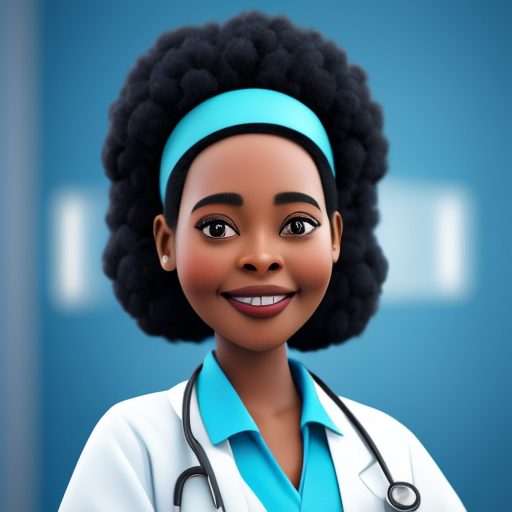
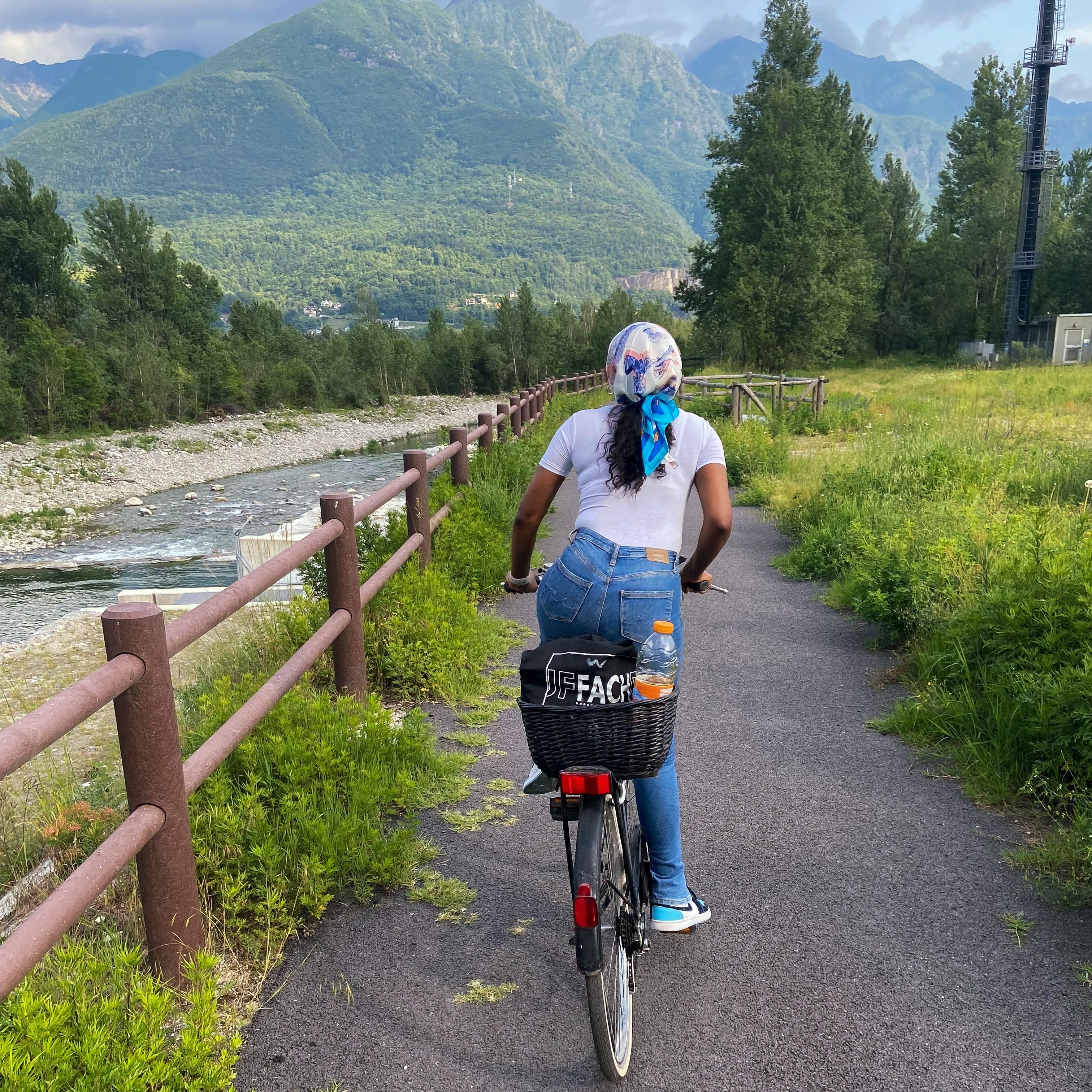
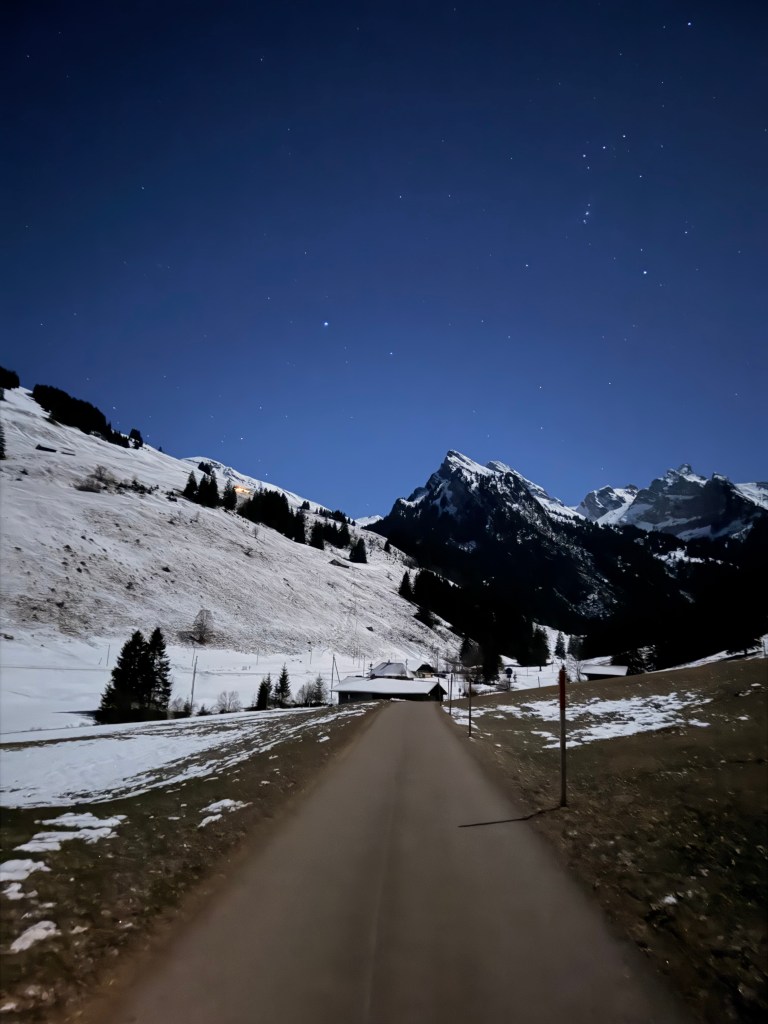
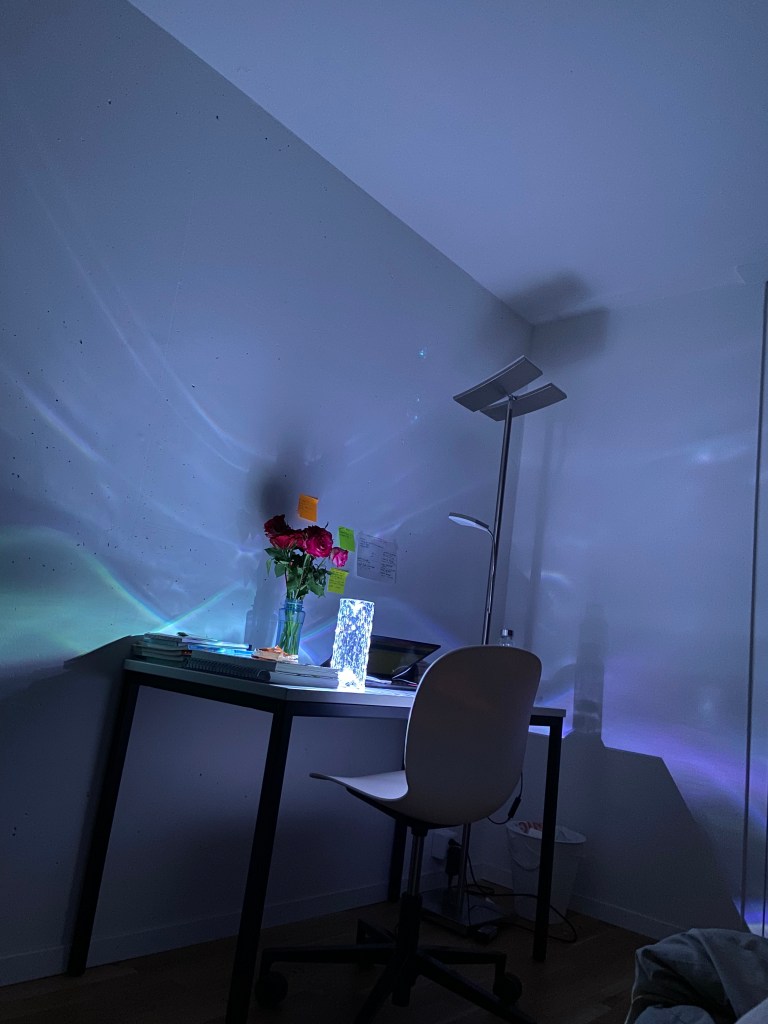
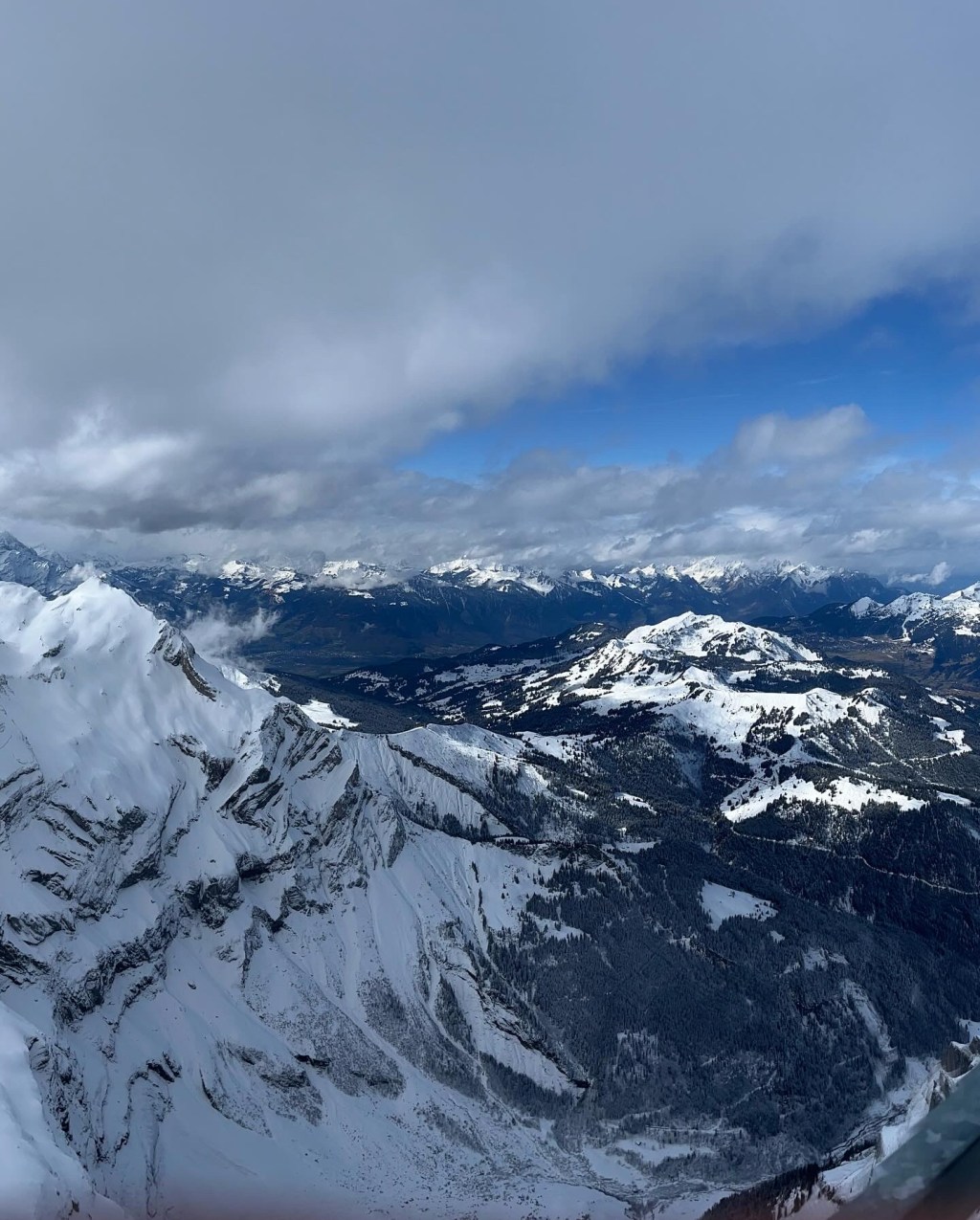
Mountains, Medicine & Me

My Journey Through Medicine, Love & Faith

I write about medicine, migration, and becoming.
This blog holds reflections from the in-between — between countries, languages, and professional identities. It is a space for quiet progress, slow growth, and faith during long seasons of waiting.
Welcome to the journey!😉

  • Not all growth is loud. Some of it happens quietly — in endurance, in stillness, in becoming.
    When Progress Is Quiet🪴

    Like many highly motivated, high-achieving medical students, I imagined that graduation would naturally lead to the next step – starting my career as a doctor. It felt linear, almost guaranteed.

    Instead, my studies ended with displacement. I fled war and arrived in Switzerland carrying a temporary visa, a laptop, and the quiet hope that I might still find a way to begin again.

    In the first few months of living here, it became painfully clear that my chances of “making it” felt slim to none. I was confronted with a culture shock far more brutal than the one I had adapted to in Ukraine. The bureaucracy was harsher for people from third-world countries, the languages more confusing, and everything far more expensive than in Eastern Europe. The unspoken and sometimes spoken assumption was that with all these hurdles, I would eventually have to abandon my dream of becoming a physician.

    Looking back, I realise that I never accepted that conclusion. Many called me too ambitious, even stubborn. My response was always the same: why should I give up my dream simply because the system makes it nearly impossible for people like me to pursue it, especially in a country facing a clear shortage of healthcare professionals?

    That was the beginning of my journey through medicine marked by limited opportunities, generous mentors, and the slowest progress imaginable toward a dream that has now spanned years. This path forced me to rethink what success truly means, particularly in medicine, and even more so when migration is involved.


    The Reality of Quiet Progress

    I vividly remember the moment I realised that I am a physician and that my voice matters.

    I was on a connecting train to Vienna International Airport after visiting family when I met a professor of infectiology who was also heading home. At the end of our conversation, he simply said, “Good luck in Switzerland, Doc.”

    That sentence stayed with me.

    From that day on, I stopped allowing myself to feel small in the research lab where I was working at the time. By the end of my eighteen months there, it became clear that my heart longed for clinical work, not research. That clarity pushed me to start again from the ground up : seeking internships, accepting further delays, and watching my progress slow even more.

    Quiet progress looks like humble beginnings.

    It looks like awkward lunch conversations with resident doctors, where I had to explain my existence for the millionth time; often reopening deeply traumatising memories. Eventually, I began eating lunch later than everyone else. Quiet progress means going above and beyond to prove competence, discipline, and dependability just to be allowed to belong.

    For me, it meant waking up at 4 a.m. every day and enduring a one-and-a-half-hour commute to work, just to arrive on time for morning report alongside the resident doctors. It meant suppressing emotions in the face of passive-aggressive remarks and inappropriate behaviour directed at me daily, often because of how I look. It meant enduring power displays from those who knew we had the same level of experience, while I waited for my diploma to be recognised in their country.

    This kind of progress is filled with repetition, redundancy and the exhausting feeling of putting in enormous effort without acknowledgment. Over the past year, I began to wonder whether I still remembered my destination, or whether I was simply trapped in a loop of endurance and stagnation.


    Relearning How to Measure Growth

    As I enter my fourth year of this slow journey toward working as a doctor in Switzerland, I’ve learned to notice the small wins the ones that don’t feel like victories while you’re still enduring.

    My German has improved, and I see how patients open up to me more easily, feeling heard rather than intimidated by the white coat. I’ve formed deeper, more meaningful friendships, even with colleagues. My marriage is thriving; hardship has drawn my husband and me closer together. My faith in Jesus has deepened, because there remains no clear explanation for how I have endured this long wait.

    What if stillness is part of becoming?

    I am no longer intimidated. I walk my path with greater ease, even when the destination remains unclear. I no longer feel the need to over-explain my existence or justify my presence.

    And so I wonder when this season of endurance finally comes to an end, and I begin working fully as a doctor, perhaps the real transformation will not only be professional. Perhaps I will arrive not just more qualified, but more patient, more grounded, and more human.


  • When I first arrived in Western Europe, I truly didn’t expect to encounter such a diverse range of languages in everyday life. Like many outsiders, I had assumed that everyone in Europe could speak only fluent English which, in retrospect, was its own funny misconception. I quickly realised that Europe, much like Africa, is an amalgamation of nations, cultures, traditions, and languages.

    As I was integrating into a new society, I was already prepared to learn a local language. But imagine my surprise when I discovered that Switzerland has four official languages! Based on population demographics, German was the best choice for me, spoken by over half of the country, followed by French, Italian, and Romansh (and of course, Swiss German dialects).

    Before I explain how I managed to learn German in a relatively short period, it’s important to understand why language learning is so crucial in Switzerland especially for foreign doctors.

    Switzerland may be modern and efficient, but it still relies heavily on the postal system. Important documents contracts, insurance letters, confirmations, invoices all arrive in German. To obtain a B residency permit, you need at least A-level German. These are just a few everyday examples.

    But the professional requirements go even further.

    In 2018, the Federal Government introduced a major rule:
    Foreign doctors must prove at least B2-level proficiency in one of Switzerland’s official languages before their medical degree can be recognized.

    This requirement alone delayed my application for almost two years on top of the challenge of retrieving academic documents from war-stricken Ukraine. Learning German wasn’t optional; it was the gatekeeper to my dream.

    So… how did I actually learn German?

    What Worked for Me

    1. Duolingo — My Gateway Into the Language

    Believe it or not, I started with Duolingo on my iPad. I practiced for hours. It was interactive, fun, and helped me quickly grasp:

    • pronunciation
    • spelling
    • basic grammar
    • simple conversations

    By the time my first notebook was full, I could already read signs and pick out words from train announcements. Duolingo gave me the confidence to continue.

    2. Intensive Language Courses

    Because I already knew the basics through self-study, starting at A2 level didn’t feel overwhelming.
    But B1 German… oh, that was a different story.

    B1 was the hardest:

    • endless grammar rules
    • cases and conjugations
    • fundamental vocabulary
    • listening AND writing tests

    There were moments I almost gave up, but I reminded myself that I had no alternative. My dream depended on this language.

    3. Immersion in Daily Life

    To make German part of my everyday life, I began:

    • watching German films with English subtitles (and vice versa)
    • labeling objects with sticky notes
    • listening to German radio
    • practicing small talk whenever possible

    My colleagues tolerated my broken German, and my then-boyfriend (now husband) was incredibly patient even when my sentences made absolutely no sense. We still laugh about those days! 🙂

    4. Consistency Over Perfection

    After completing B1, I took a short break because wedding planning and paying for language courses at the same time wasn’t realistic.
    But after our honeymoon, I went straight into daily intensive classes at B2 level.

    It was exhausting but by Christmas 2024, I was confidently holding German conversations at the dinner table. I definitely earned extra brownie points with my lovely in-laws!

    Facing the B2 Exam: Failure & Redemption

    In January, I signed up for the German B2 exam. Looking back, I probably wasn’t fully prepared but I didn’t want to start my first clinical rotation without it. I also wanted to finally submit my documents for diploma recognition.

    I didn’t pass my first attempt.

    What stung the most was missing the oral exam cut-off by just one point.

    It was heartbreaking. But there was no time to dwell …I immediately registered for the next available exam.

    With my husband’s help, we analyzed what went wrong:

    • we practiced speaking every day
    • we focused hard on written formal letters
    • during my one-hour train commute I wrote essays on my iPad
    • I sent every letter to my husband to correct the grammar

    When the results of my second attempt finally arrived…

    I passed.
    Or rather: we passed. 😊

    So, What’s the Take-Home Message?

    1. Make German part of your daily life.

    Don’t isolate it to a classroom, integrate it into everything.

    2. Adjust your environment to support learning.

    Films, radio, sticky notes, conversations… it all adds up.

    3. Don’t fear making mistakes.

    Your sentences won’t always make sense at first and that’s okay.

    4. Practice truly makes perfect.

    Small, consistent effort beats perfectionism every time.

    5. Try, try, and try again!

    Resilience is your biggest language-learning superpower.


    Happy German learning!

    If I could learn German during war, relocation, wedding planning, and medical rotations…
    so can you.
    You’ve got this. 🇨🇭

  • Grace, Grit and the Alps – How it all started..

    Masvingo, Zimbabwe — the year is 2005. I am in third grade at Gokomere Primary School, and our assignment that morning is to draw how we imagine our future careers. Hesitant but hopeful, I pull out my sharp HB pencil and sketch a young woman with short hair, a white coat, and a name tag that reads “Dr. B.”

    From that day onwards, my third-grade teacher called me Dr. B until the end of primary school. That small act of belief planted a seed in me. I started reading about what it would take to become a doctor, and in high school, I found myself drawn to the life sciences, physics, and mathematics. Growing up in a Catholic school, my values were deeply rooted in faith, and as the firstborn of two highly educated, loving, supportive Zimbabwean parents — expectations were high. So was my determination.

    A Detour on the Path

    Fast forward to 2016. I didn’t make it into the highly competitive medical school at the University of Zimbabwe. I took a gap year, unsure of the next step and uninterested in engineering or architecture. Then, through a family friend, I learned about the opportunity to study medicine in Ukraine.

    I applied, got accepted, and spent months battling visa paperwork while watching former classmates enjoy their first year at university. I waited, hoped, prayed… and prepared.

    Ukraine: A Second Home

    In January 2017, I said goodbye to my family and boarded a flight to Zaporizhzhia, Ukraine — ready to begin the journey I had dreamed about since childhood. Ukraine quickly became a second home. I embraced the language, the vibrant culture, my studies, rotations, and the friendships I made with both local and international students.

    One summer, I returned to Zimbabwe for an internship at the provincial hospital in Masvingo. There, I fell in love with caring for infants and newborns — many born in difficult circumstances or without family presence. Their fragility touched my heart, and neonatology began to call my name.

    When I returned to Ukraine, another challenge awaited: Zimbabwe’s sudden foreign currency crisis. I could no longer receive financial support from home and had to take on student jobs while learning to balance survival, studies, and excellence. It was exhausting, but it shaped me.

    The War That Changed Everything

    I remember the morning of February 22, 2022, vividly. Helicopters echoed above my apartment building. My phone buzzed relentlessly with calls and messages from my parents. Our lecturers reassured us that the conflict would remain along the Russia–Ukraine border. But by midday, it became clear: Zaporizhzhia was no longer safe.

    The following day, a small group of international students and I packed what we could and boarded a train toward Ivano-Frankivsk. We walked several kilometers through snow and biting winds to reach the Polish border, joining hundreds of fellow students trying to evacuate and wondering:

    What now? Where next?

    Poland offered me the option to continue medical school — but only if I restarted at fourth year. As a final-year student with one semester left, that wasn’t an option.

    Then came an unexpected blessing — an email from a family friend, whom I now call my “Good Samaritan.” He helped organize my move to Bern. And just one week after the invasion began, I arrived in Switzerland.

    Switzerland: A New Beginning

    That spring, I resumed my studies online with my Ukrainian university. That summer, I interned in paediatrics at the University Hospital in Bern. There, another kind and perceptive physician saw my passion and helped me understand how a Zimbabwean medical student with no German proficiency could build a career in Switzerland.

    I later became an exchange student at the University of Bern — while preparing for my final exams in Ukraine and still working online jobs to support myself.

    Life moved quickly:

    • In winter, I met the love of my life.
    • I passed my final exams.
    • I graduated with my Master’s in Medicine.
    • In 2023, I began my doctoral studies, clinical research, and dedicated myself to learning German.
    • A year and a half later, I married the love of my life in the beautiful Berner Oberland.
    • And this year, I started my clinical rotations under the supervision of senior physicians, waiting — once again — for recognition of my foreign medical degree.

    My journey has been anything but easy. I’ve hesitated to share it, partly because it still feels filled with uncertainty, and partly because so much of it has been about figuring things out as I go — working with what I had, trusting God, and moving forward even when I didn’t know what was next.

    I feel humbled and grateful to learn from experienced professors and specialists across paediatrics, rheumatology, neonatology, and now paediatric infectious diseases. As a junior doctor, I’m learning through mentorship, through practice, and yes — sometimes through mistakes.

    I am especially grateful for new friendships, for the love I’ve found, and for the joy of building a home in Switzerland.

    My hope is simple:
    to inspire other young doctors and medical students — especially those dreaming of working far from home — not to give up.

    Your path may twist, pause, or break open in unexpected ways.
    But with faith, perseverance, community, and courage, dreams can still take root.
    They can grow in new soil.
    They can flourish in places you never imagined.

    This is only the beginning of Mountains, Medicine & Me.
    Thank you for being here.